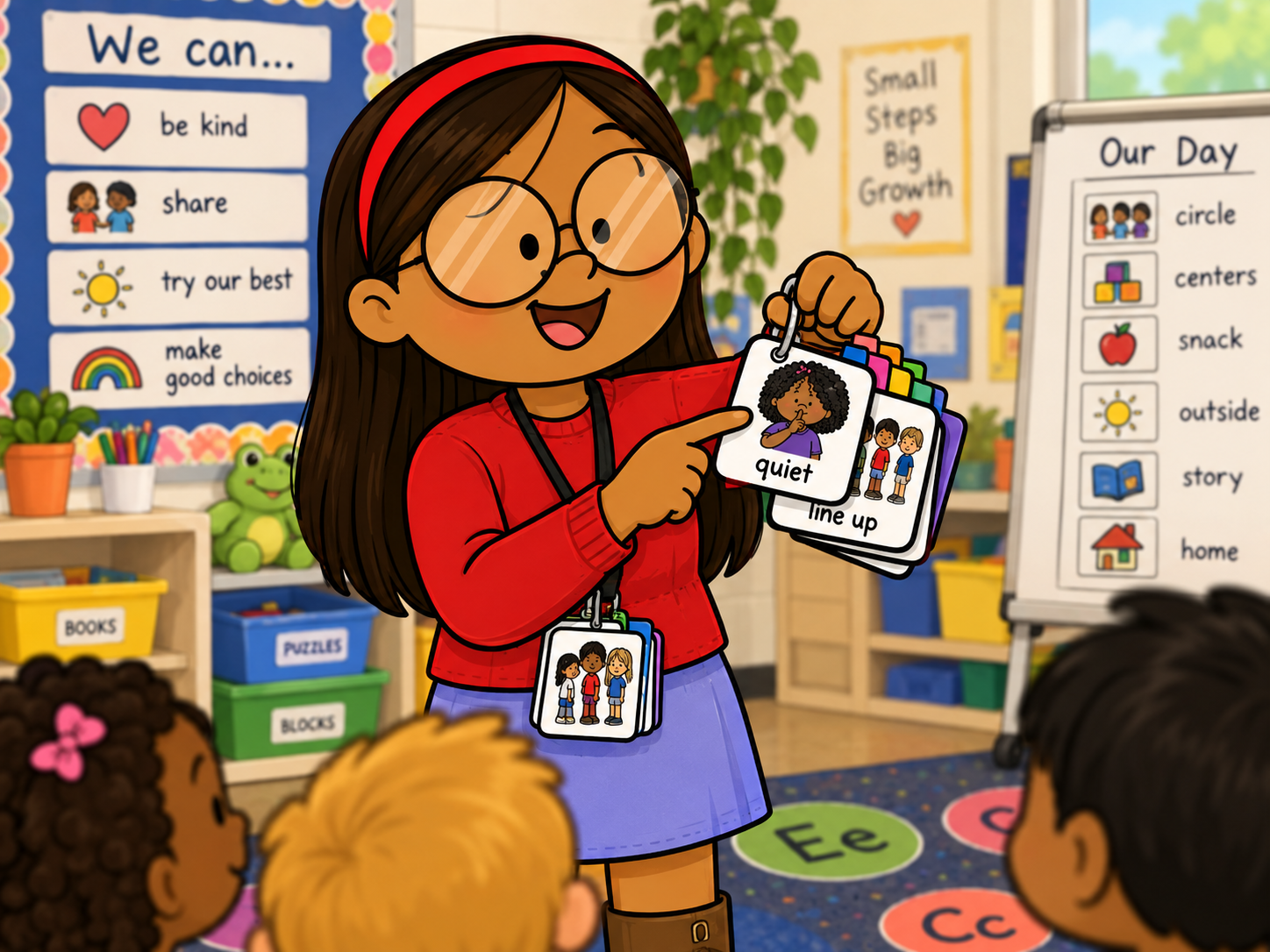
Sometimes a Picture Works Better Than Another Reminder
Using Visual Directions in Pre-K and Kindergarten
There are moments in a Pre-K classroom when one more verbal reminder is probably the last thing anybody needs.
“Sit down.”
“Remember, we’re walking.”
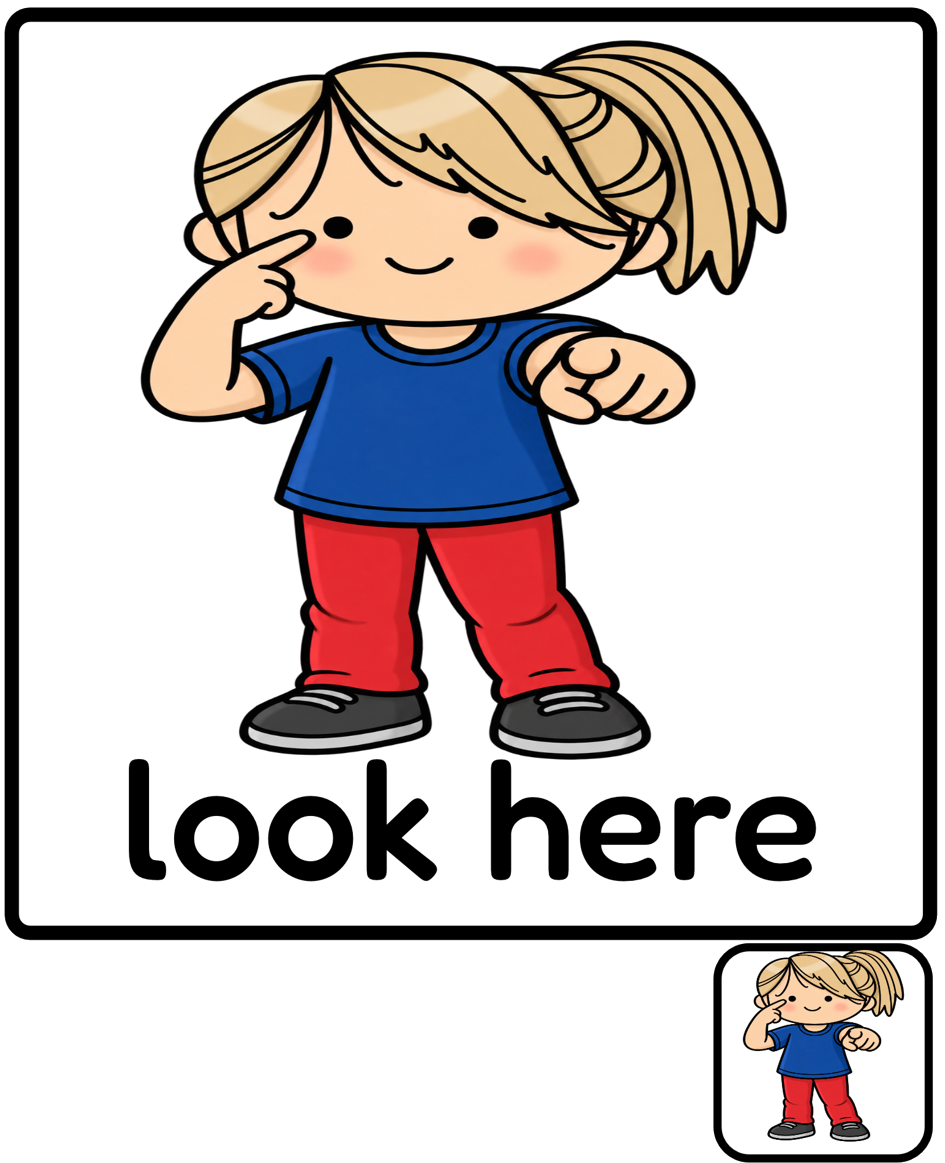
“Eyes this way.”
“Wait.”
“Shhh.”
“Line up.”
By the third or fourth repetition, the teacher is saying more and the children may be hearing less.
Years ago, I knew a simple alternative as Super Symbols. The idea was uncomplicated: instead of repeating a direction, show the child a picture that represents what you want them to do. I hadn't heard the term used much recently, so when I started thinking about creating a new set for our classroom, I wondered whether my memory had wandered off and decorated the story a little.
It hadn't. The term Super Symbols still turns up in special education and behavior-support resources, including materials describing visual commands such as sit, stand, listen, and quiet. Today, though, you're much more likely to find the broader practice described as visual supports, visual prompts, visual cue cards, or portable visual supports.
And there is good reason the idea has stuck around.
Why Visual Directions Make Sense
Young children are being asked to process an extraordinary amount of language during a school day. Directions, questions, explanations, corrections, conversations, songs, stories, transitions. It's a lot of words for little brains.
Head Start describes visual supports as a way of presenting important information in a form children can understand and use. They can help children understand expectations, routines, transitions, and what they should be doing, while supporting greater participation and independence.
The IRIS Center at Vanderbilt makes the connection to preschool classroom management particularly clearly. It recommends visual supports for preschool children and notes that they can be especially helpful for children with disabilities and dual-language learners. Importantly, IRIS specifically describes a small portable flip book that can be carried by a teacher or child and pulled out when a visual reminder is needed.
That portable piece is what has always appealed to me.
A poster on the wall is useful. A picture in your hand at the exact moment you need it is different.
The Goal Isn't to Stop Talking
Visual directions aren't meant to replace teacher language.
At first, the picture and the words belong together.
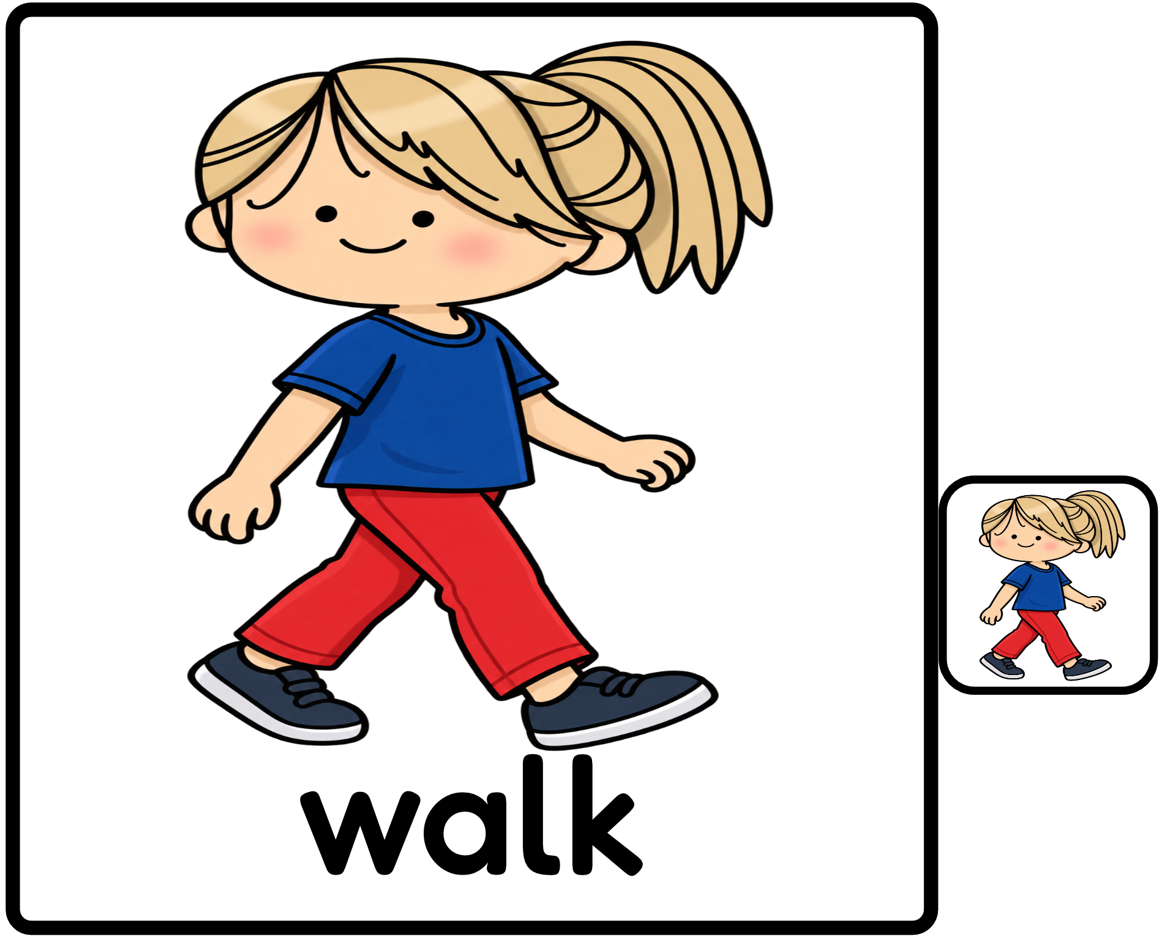
Show WALK and say, “Walk.”
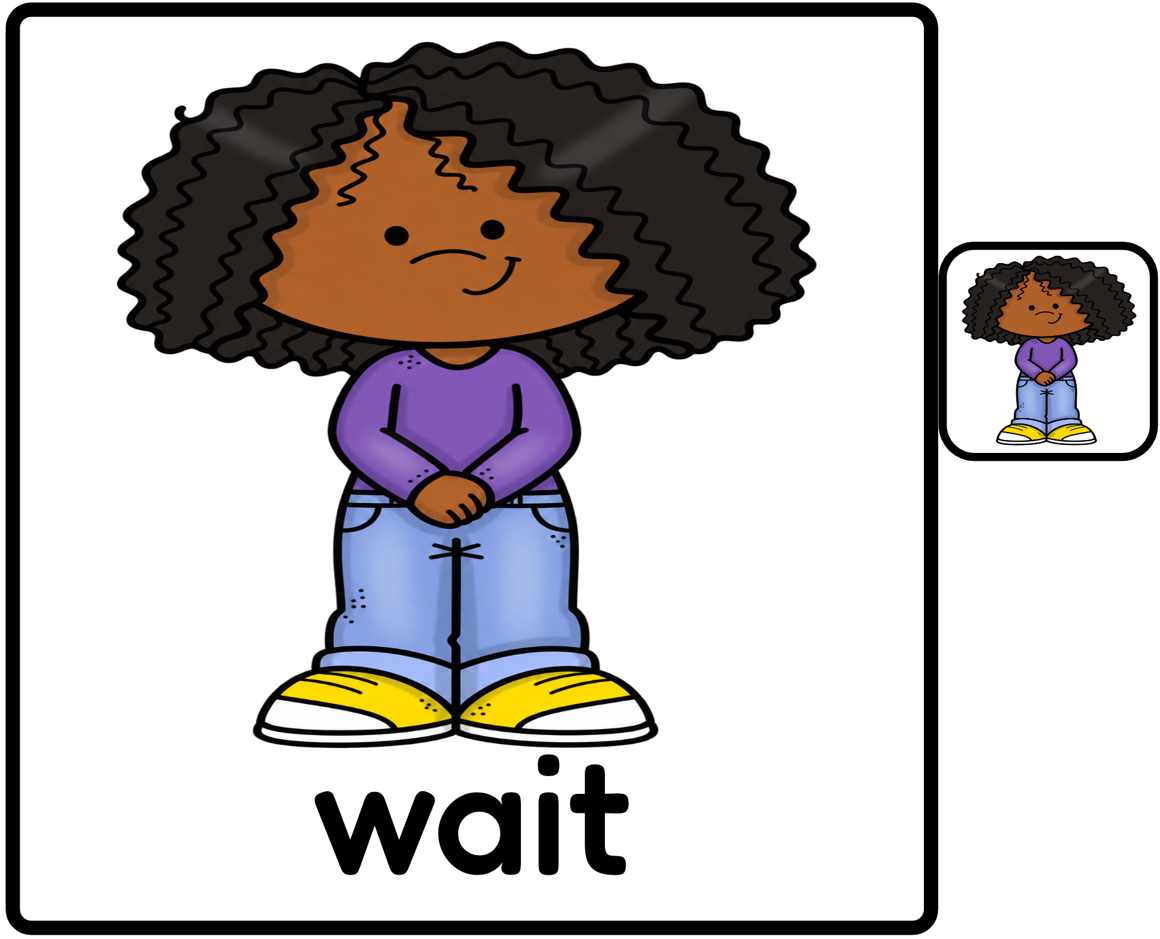
Show WAIT and model what waiting looks like.
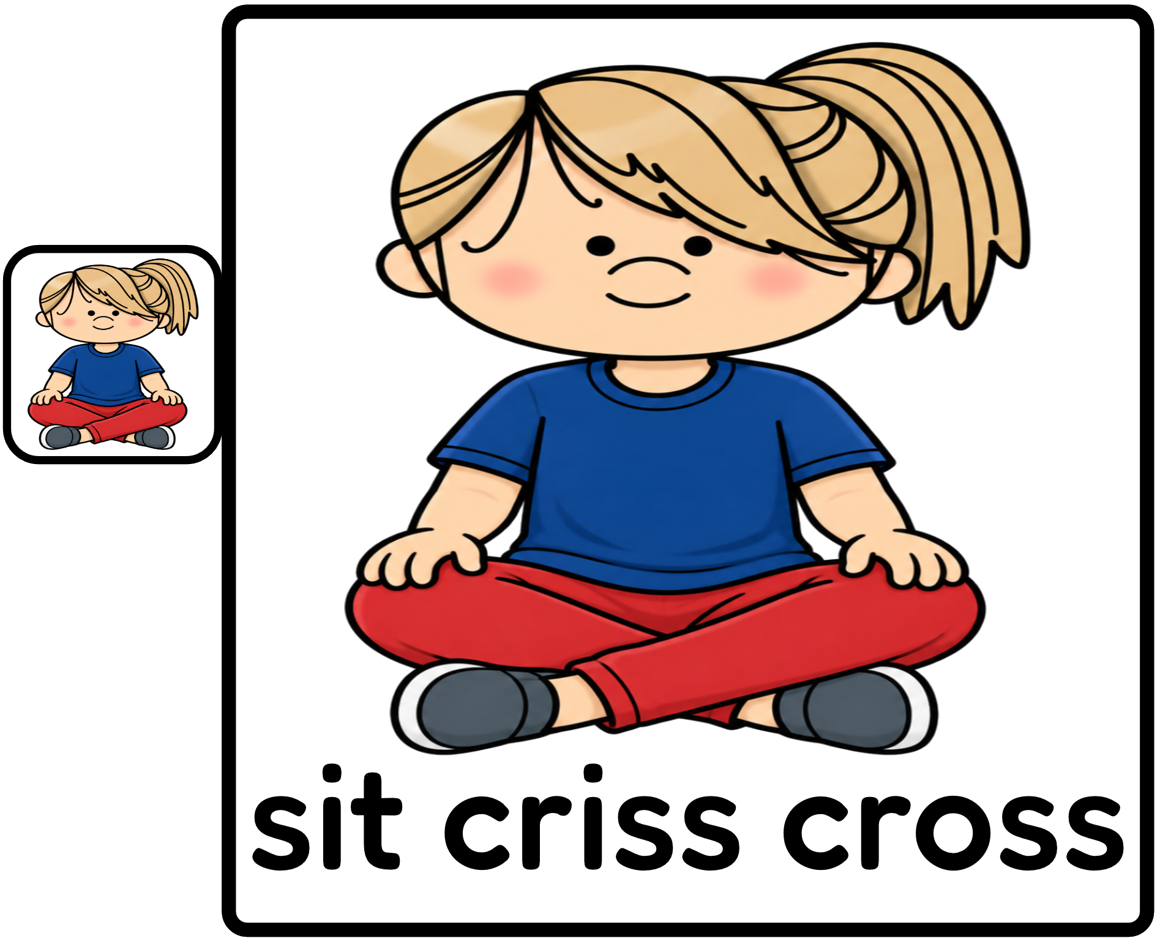
Show SIT CRISS CROSS, demonstrate it, and let the children practice.
The difference comes later. Once children understand the visual, you don't necessarily have to interrupt what you're doing to repeat the instruction. You can hold up the card, point to it, or quietly flip the book to the appropriate page.
The reminder is still there. The extra stream of language isn't.
That's particularly useful during group instruction. If one child needs to be reminded to sit, I don't necessarily want to stop a story being enjoyed by nineteen other children so I can announce, “Please sit criss cross.”
Sometimes a picture can do the job with considerably less fanfare.
Choosing the Directions
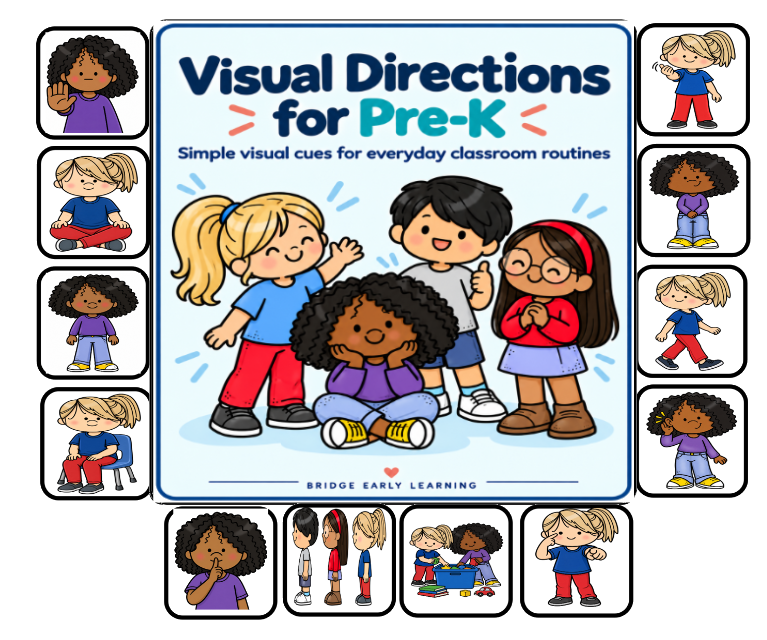
For our new Visual Directions for Pre-K set, I wanted to stay away from vague behavioral language and concentrate on directions a teacher might genuinely want to give silently.
We eventually settled on twelve:
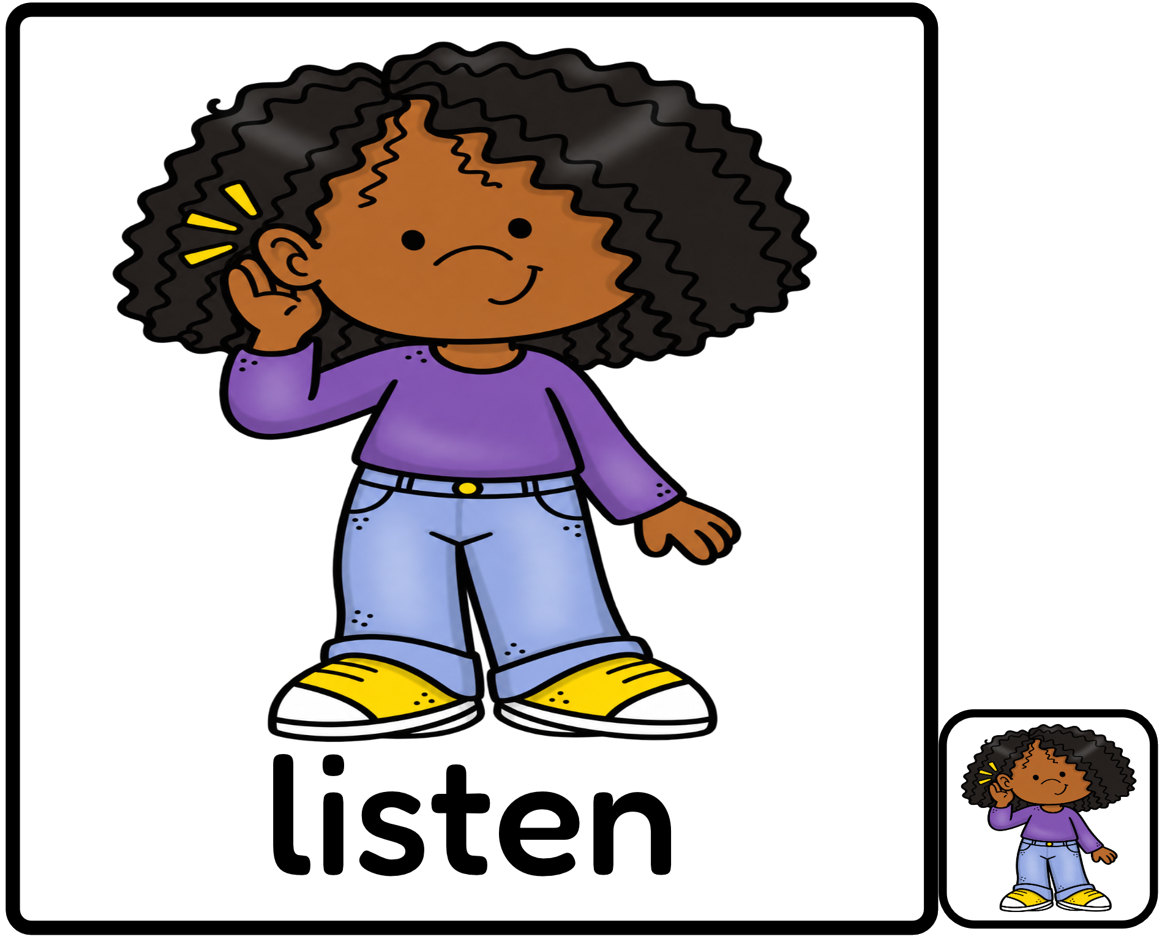
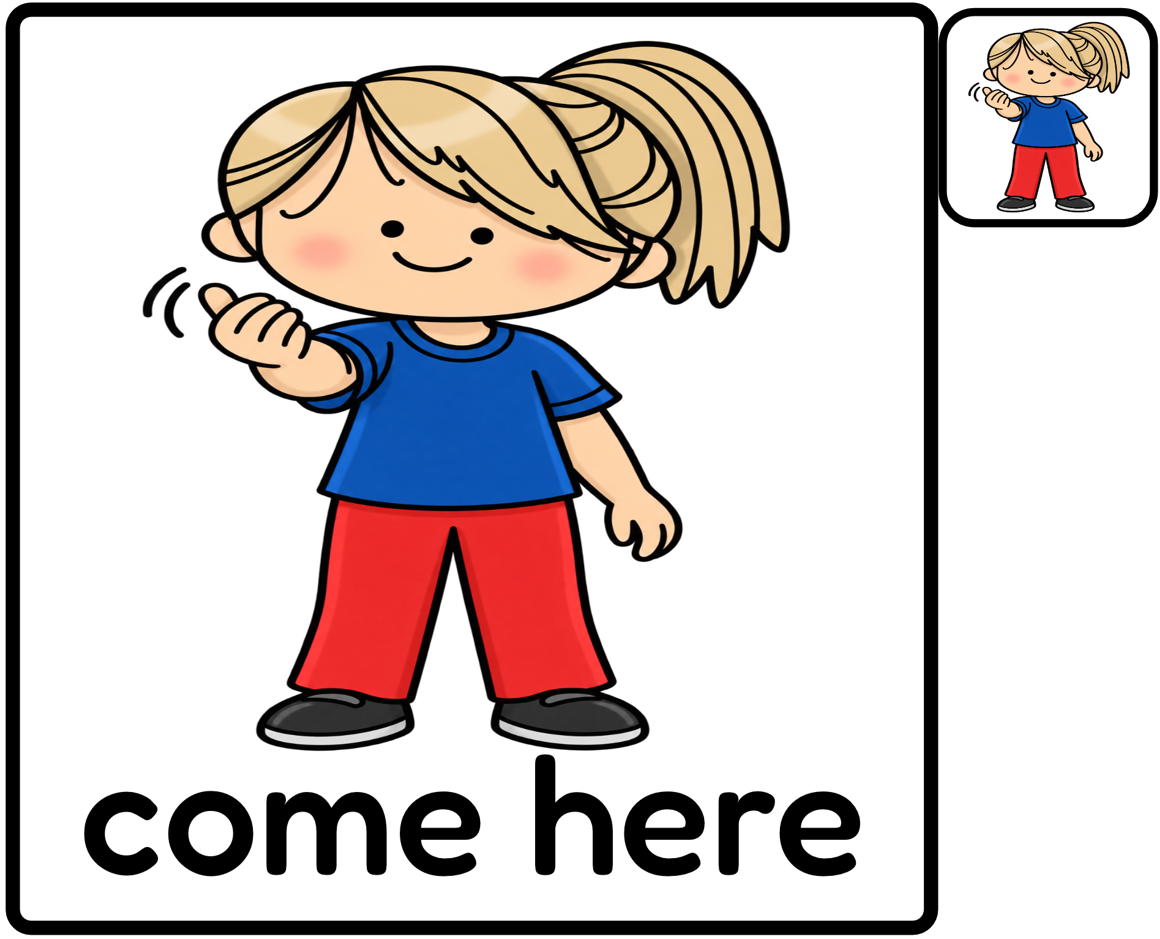
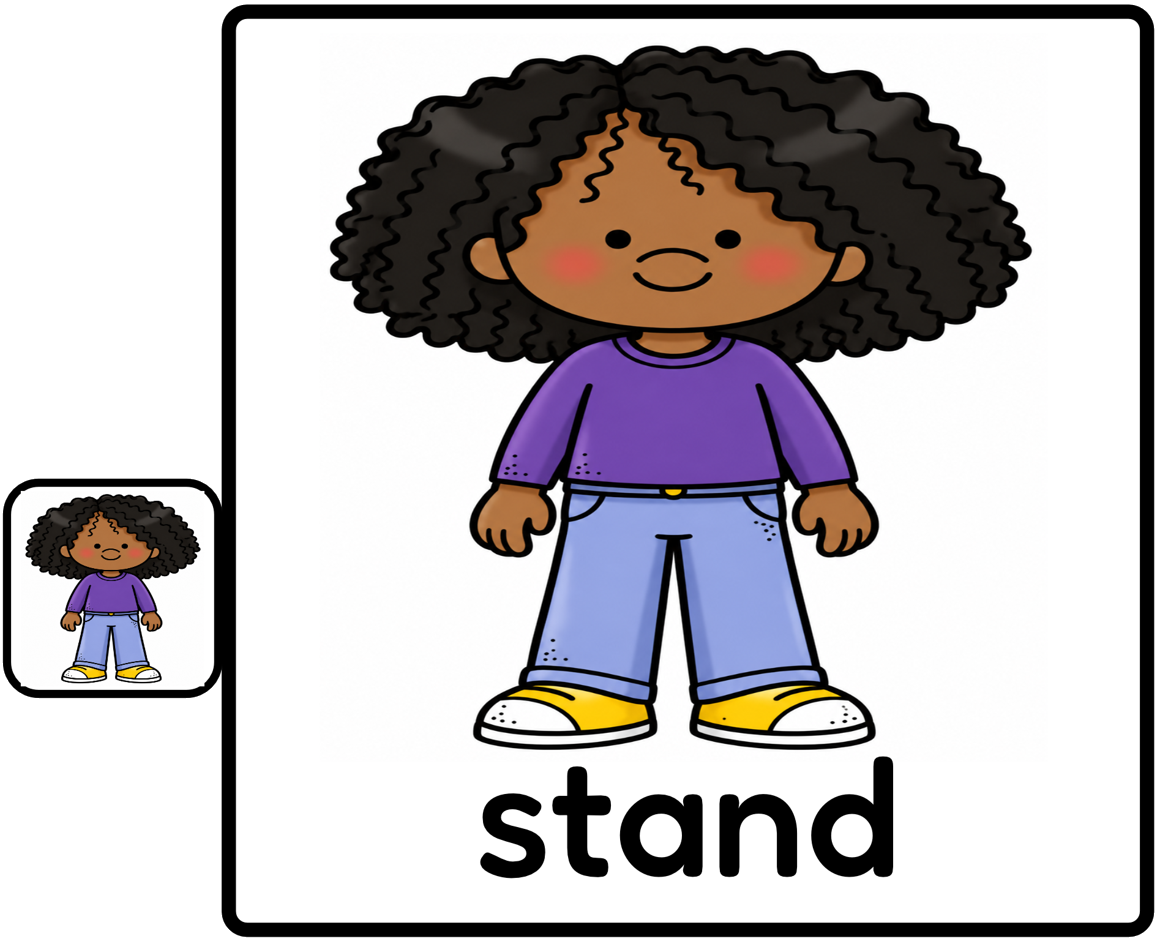
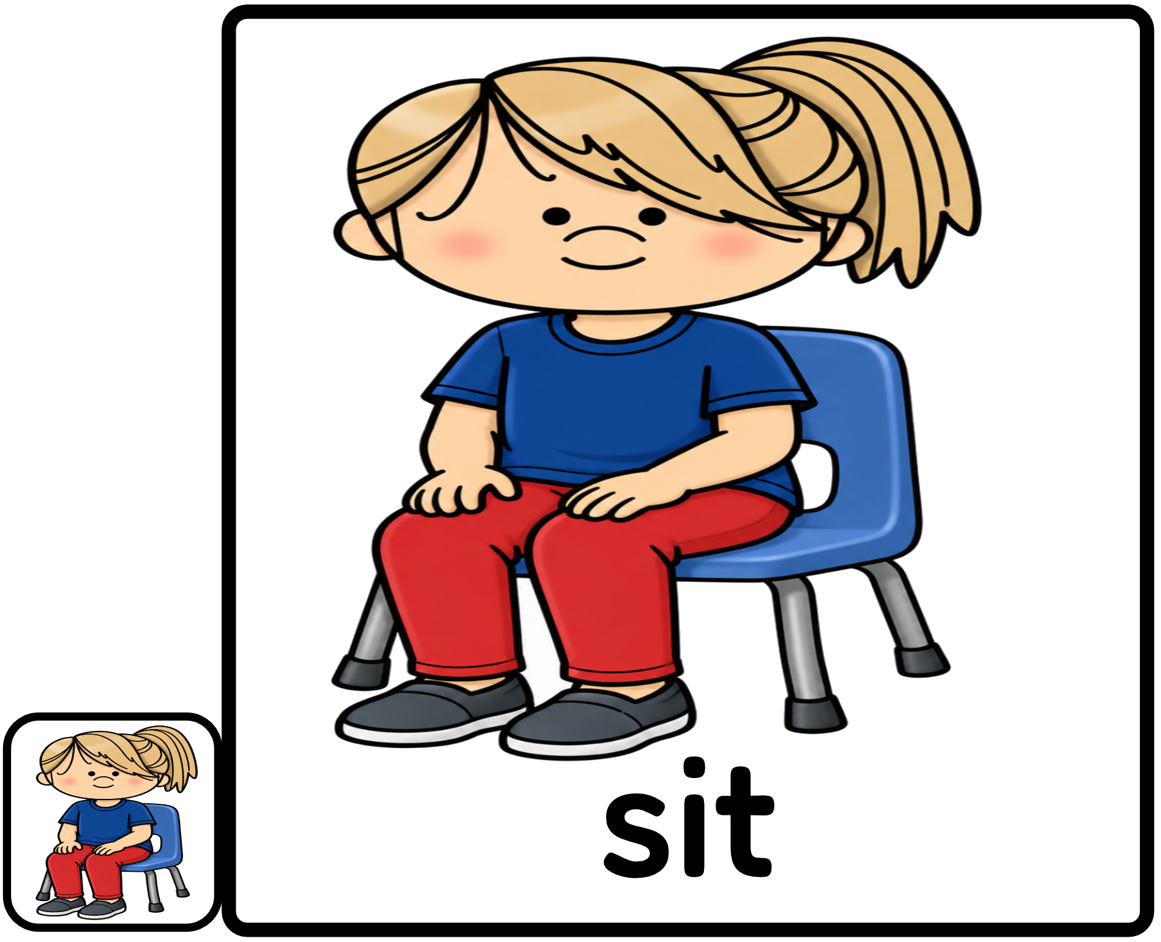
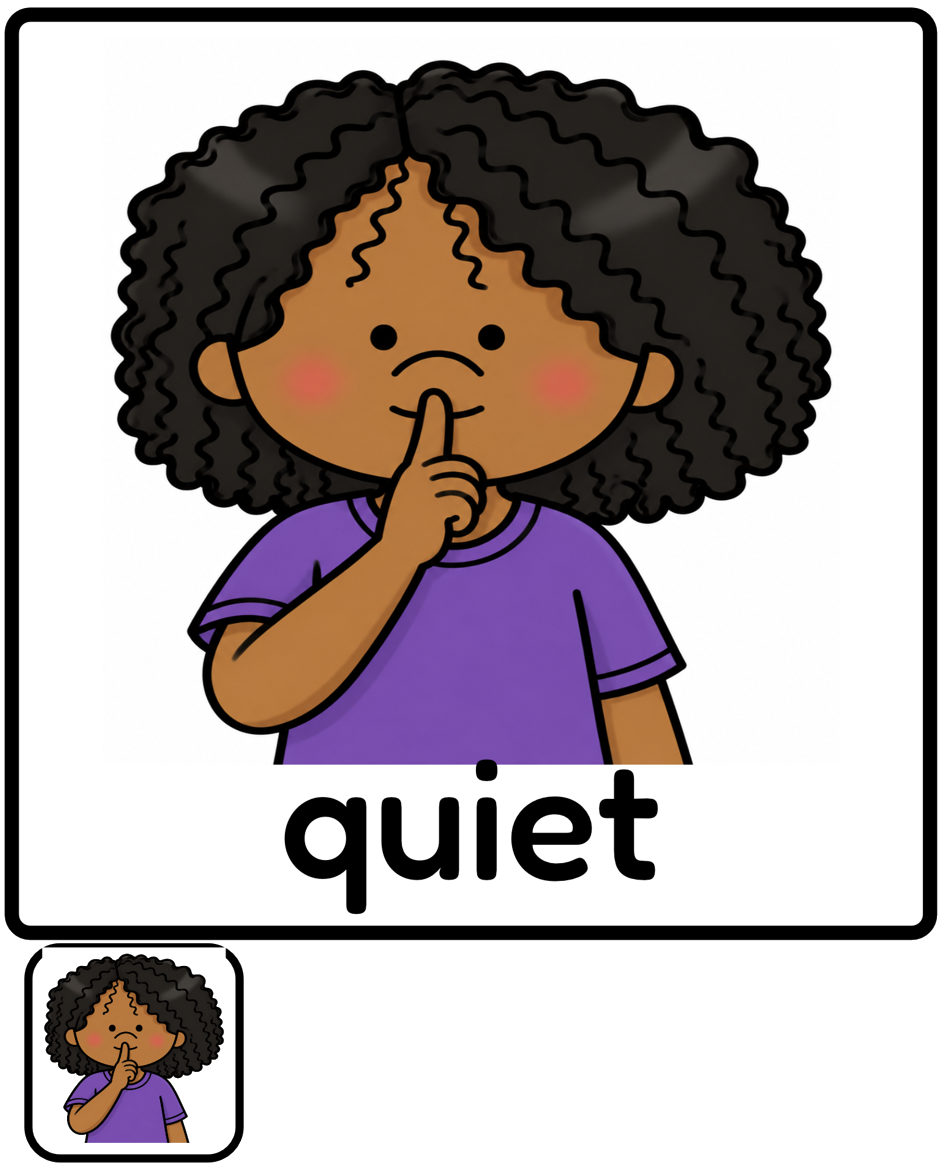
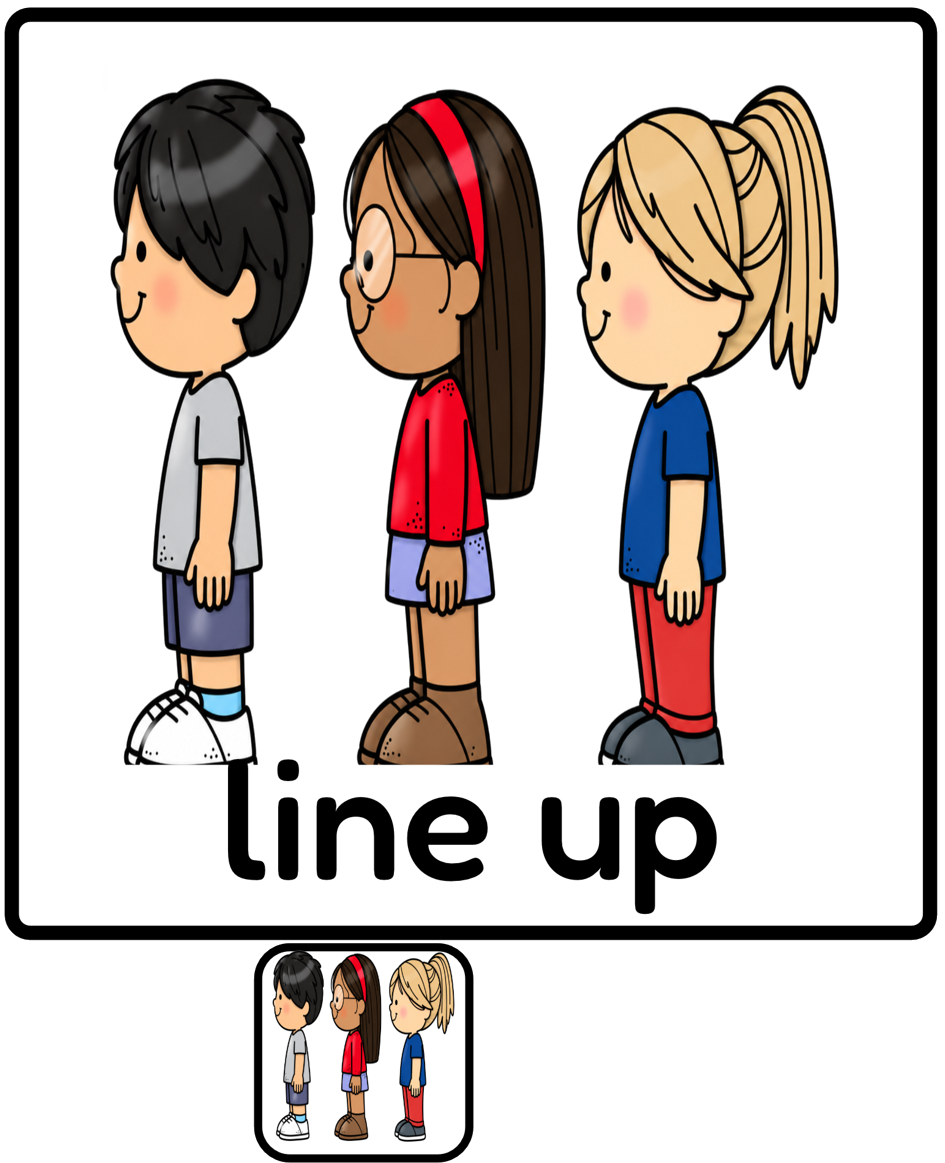
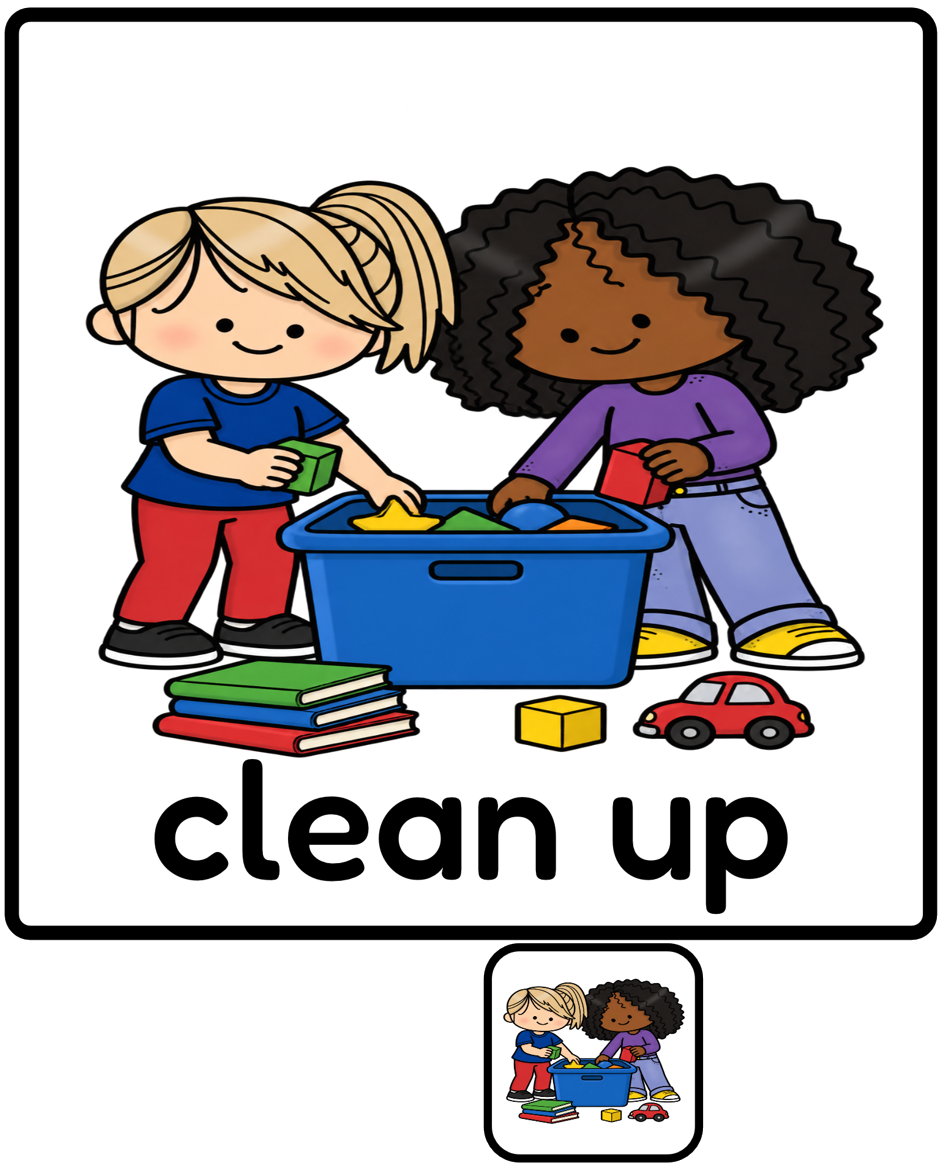
Stop · Sit Criss Cross · Stand · Sit · Quiet · Line Up · Clean Up · Look Here · Listen · Walk · Wait · Come Here
There are lots of other possibilities, of course. “Helping Hands,” “Walking Feet,” breathing cues, voice-level reminders and SEL prompts can all be useful.
But I wanted this particular set to have a very specific job: What are the directions I repeatedly give during an ordinary Pre-K day that could sometimes be communicated with a picture instead?
That question trimmed the list pretty quickly.
Why the Pictures Matter
A visual support only works if children can figure out what they're looking at.
IRIS recommends making sure the visual clearly represents the expected behavior and pairing pictures with written language. It also suggests considering portability and durability when designing the support.
That influenced several decisions in this set.
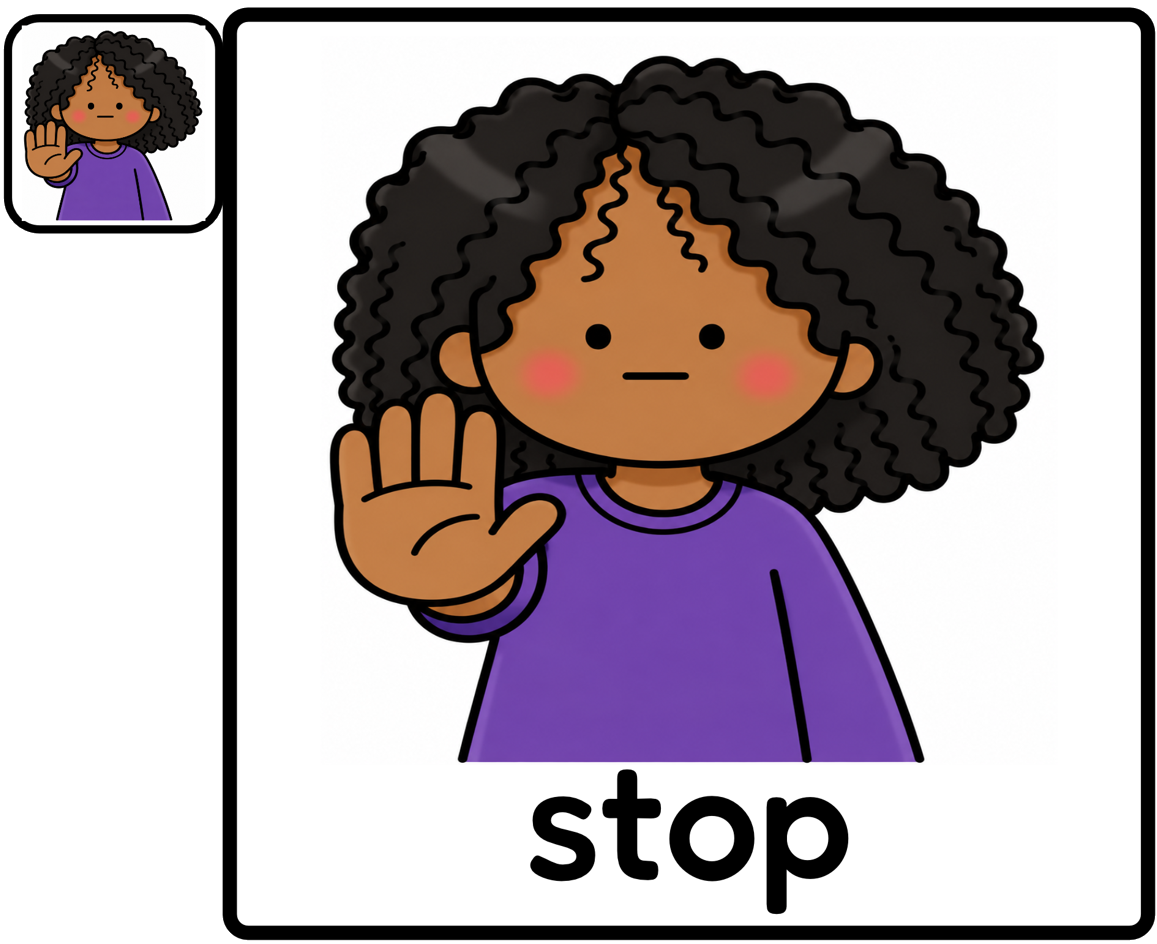
The children walk rather than displaying a “no running” symbol. A child listens with a hand cupped to an ear. Stop uses the familiar open palm. Clean Up shows children actually putting materials into a bin.
The emphasis is on showing children what to do, not illustrating what they're doing wrong.
We also deliberately used a recurring group of children with different racial and gender representation. The characters are familiar from card to card, but no single child becomes the one who is always being corrected. That's a small design decision, but an important one.
Classroom Size and On-the-Go
I like having two versions of the same system.
The classroom-size book can sit near the teacher's chair, meeting area, or another high-use spot. I print the pages on cardstock, laminate them, stack them in order, and spiral-bind them across the top. Then I can simply flip to the direction I want with the locator tabs.
No spiral or GBC binder? A hole punch and binder ring work perfectly well. Educational technology occasionally peaks at “put a hole in it.” 😄
The smaller version is designed to be portable or wearable. The cards include locator tabs so the teacher doesn't have to leaf through twelve pictures while the classroom evolves into its own weather system. It can be attached to a ring, clipped to a lanyard, or kept close at hand.
That portability isn't just a convenience. IRIS specifically identifies key-ring and lanyard flip books as a way to make visual supports available across different settings.
A Simple Way to Introduce Them
I wouldn't hand a teacher the book on Monday morning and expect children to understand twelve new symbols by osmosis.
Teach them.
During a calm part of the day, show STOP. Say “Stop.” Model it. Let children practice.
Do the same with WAIT, LISTEN, WALK, and the others.
Then begin using the pictures during actual routines. At first, pair the visual with the verbal direction. Gradually let the visual carry more of the message.
Head Start similarly recommends talking about behavioral-expectation visuals, modeling the behaviors, and giving children repeated opportunities to practice them.
Eventually, you may find that simply holding up a card is enough.
And that is really the point.
Less Talking Isn't Less Teaching
There's a temptation in early childhood classrooms to solve every problem with more language.
Sometimes that's exactly what's needed.
Sometimes the fourth explanation is just the first explanation wearing a fake mustache.
A visual direction gives children another route to the same information. It is concrete. It stays in front of them after the words disappear. And once children know the system, it allows a teacher to redirect without stopping everything else that's happening.
For me, that's the appeal.
Not silent classrooms. Not robotic compliance.
Just one more way to make expectations clear, predictable, and understandable, while occasionally allowing the teacher's voice to clock out for thirty seconds.
Visual Directions for Pre-K grew out of a tool I remembered using years ago, updated for the way our classroom works today. Sometimes the simplest ideas are worth bringing back.
Rick
Free PDF • Print and use with your class


Have a Question or an Idea?
Looking for something you can’t find? Have a question about one of our activities? Or have an activity or classroom idea you’d like to share on the Bridge Early Learning website?
I’d love to hear from you.
Drop me a line: