5 Easy Question of the Day Formats for Preschool
By Rick | Bridge Early Learning | September 2026
Morning meeting doesn’t need another complicated routine.
Sometimes the hardest part of Question of the Day is simply coming up with a question that is interesting enough for preschoolers to answer, simple enough for them to understand, and useful enough to lead somewhere after everyone has voted.
The good news is that you don’t need a brand-new kind of activity every morning. A few reliable question formats can give children very different opportunities to talk, think, make choices, solve problems, and share what they know.
Here are five that work especially well with Preschool and Pre-K. These five formats are the same ones we use throughout our Question of the Day resources, so children can learn the routine once and respond to lots of different kinds of prompts.
1. Would You Rather?
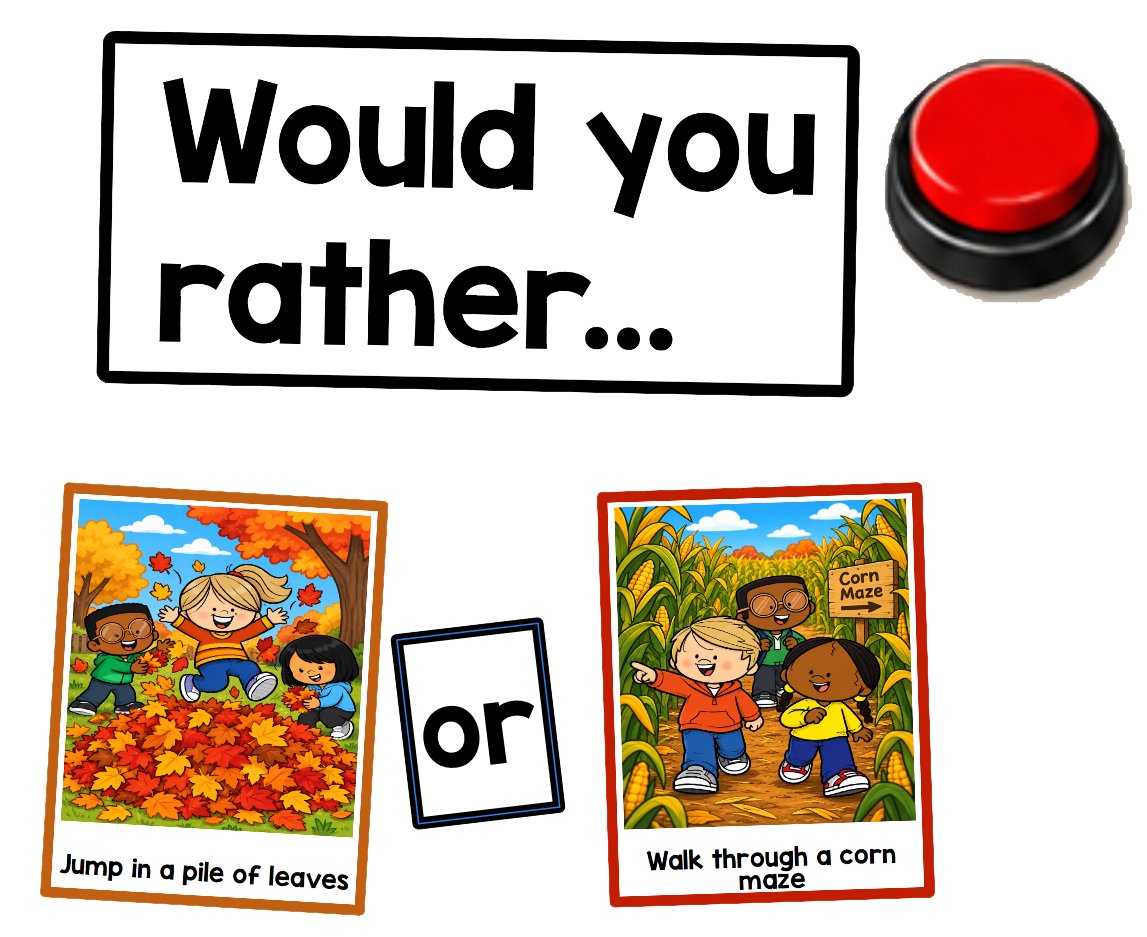
Would you rather jump in a pile of leaves or walk through a corn maze?
Would You Rather questions are probably the easiest place to start because there is no wrong answer.
Children make a choice based on their own preferences and experiences. That low-pressure decision gives even reluctant speakers something concrete to contribute.
The real value comes after the vote.
Why did you choose that one?
Who chose something different?
Did anyone change their mind after hearing a friend’s idea?
A simple preference question can quickly become practice in oral language, listening, turn-taking, and explaining a choice.
For young children, pictures make these questions much more accessible. Instead of requiring children to hold two verbal choices in memory, they can see both possibilities while they decide.
2. What Would You Use?
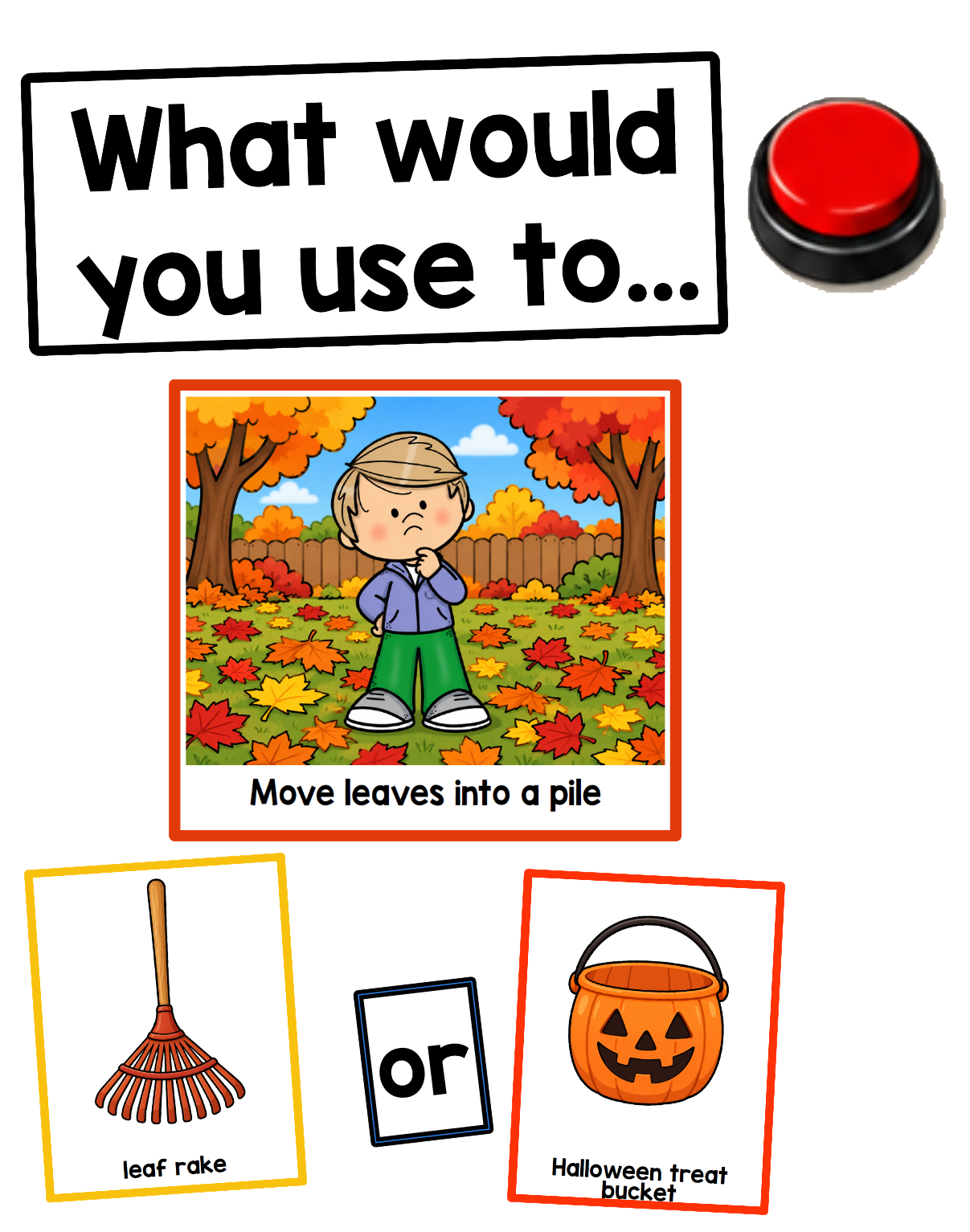
What would you use to move leaves into a pile: a rake or a Halloween treat bucket?
This format shifts Question of the Day from preference to problem-solving.
Children are given a familiar situation and two possible tools or objects. They have to think about what each item does and decide which one would actually solve the problem.
That brings in vocabulary, function, background knowledge, and reasoning without turning morning meeting into a quiz.
You can follow up with questions such as:
Why would the rake work?
What would happen if we tried the bucket?
Can you think of another tool that might work?
It’s also a nice way to see what children already understand about everyday objects before beginning a related lesson or theme.
3. Yes or No
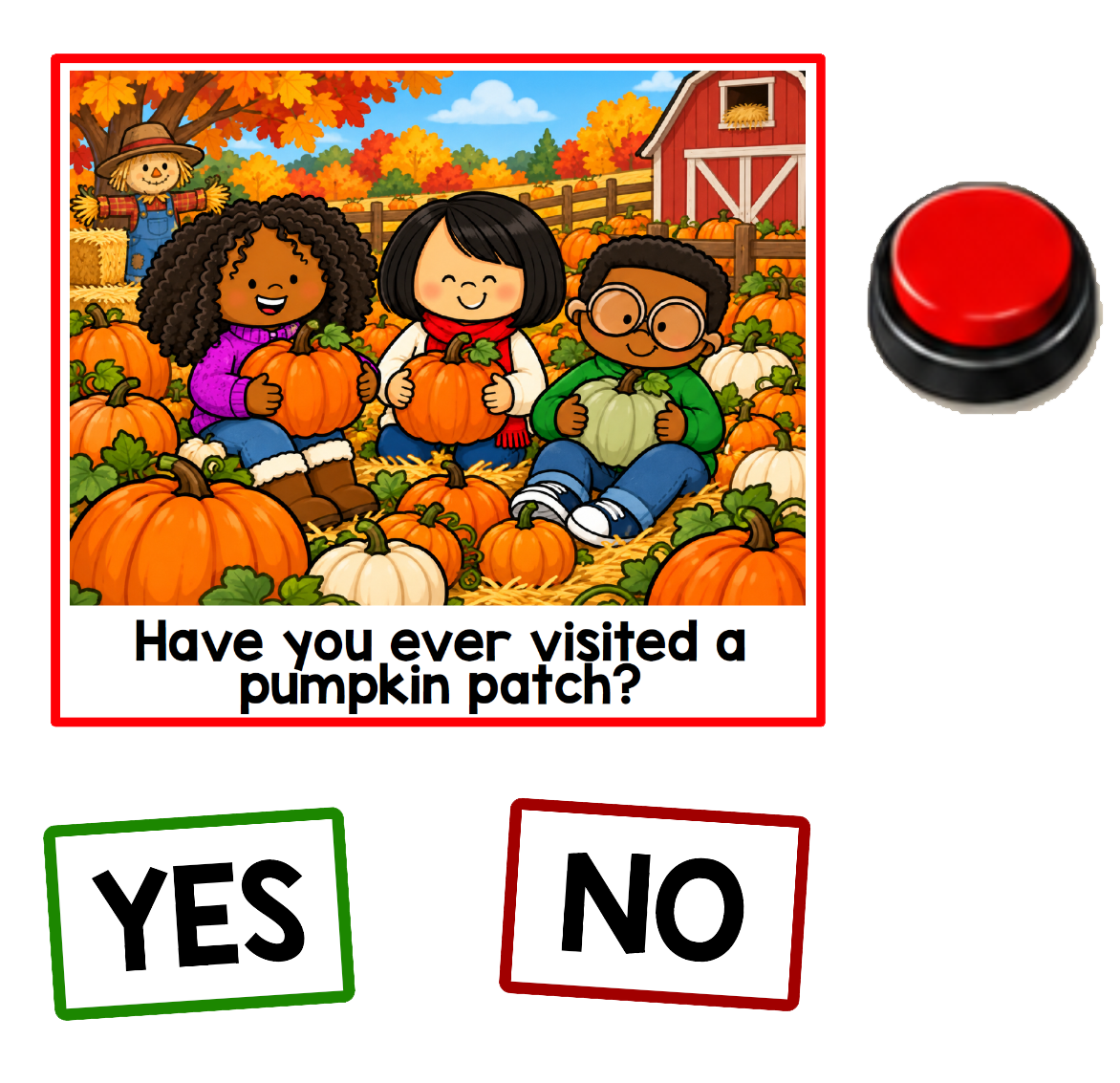
Have you ever visited a pumpkin patch?
Yes/No questions look almost too simple.
That’s exactly why they’re useful.
They give every child an immediate entry point into the conversation. Children who aren’t ready to explain a long answer can still participate successfully by making a clear choice.
Then you can gradually stretch the response.
“Yes.”
“Tell us one thing you remember.”
“No.”
“What do you think you might see there?”
Questions about preferences and experiences also help children discover things about one another. Suddenly the voting board isn’t just a chart. It becomes a snapshot of the classroom community.
4. Real or Make Believe?
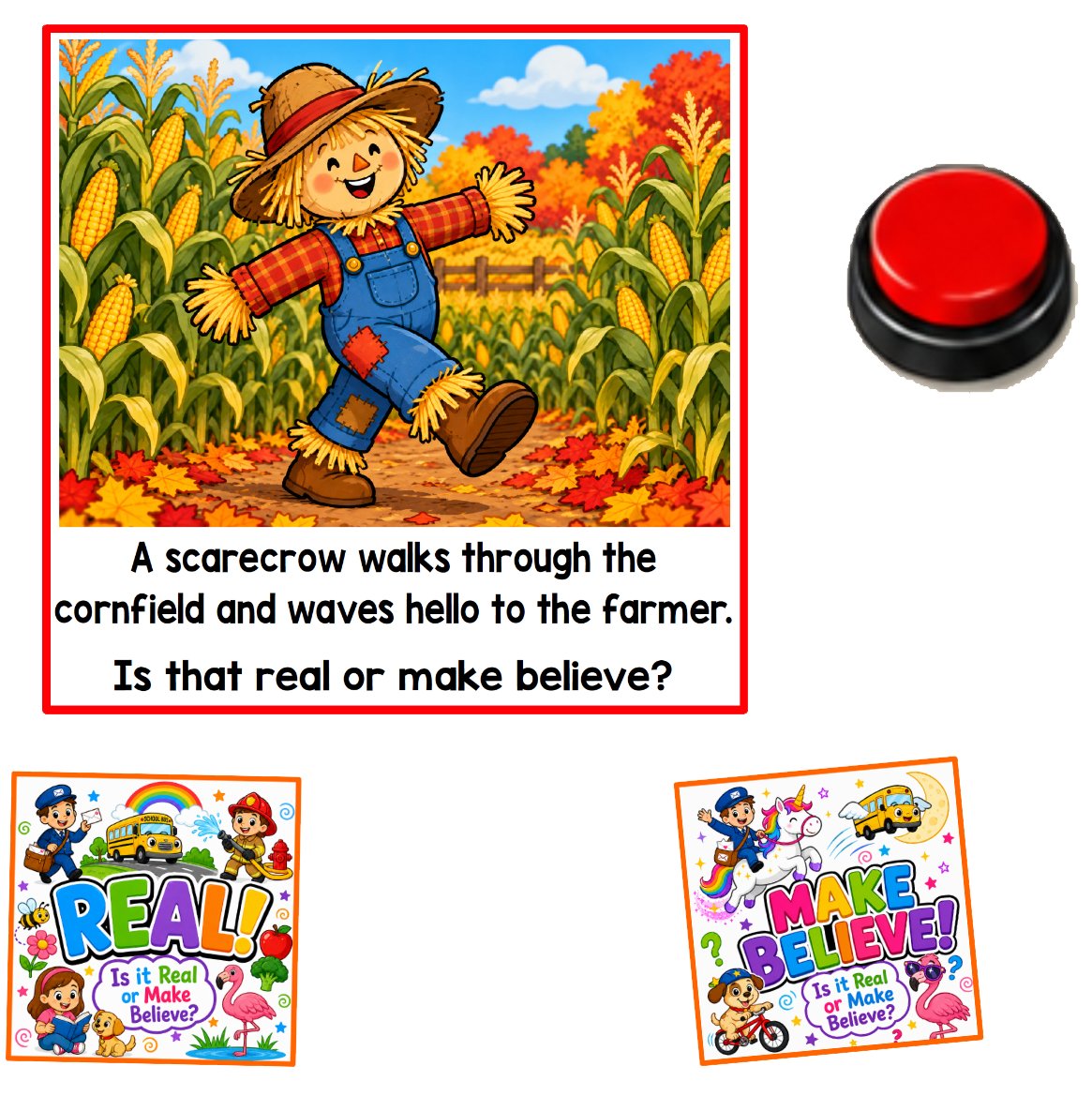
A scarecrow walks through the cornfield and waves hello to the farmer. Is that real or make believe?
Real or Make Believe questions ask children to compare an idea with what they know about the world.
Some answers are obvious. Others invite surprisingly interesting discussions.
Children have to listen to the whole statement, identify what matters, and decide whether it could actually happen.
The best part is asking:
How do you know?
That small question moves children from choosing an answer to explaining their thinking.
Real or Make Believe works especially well with seasonal topics, stories, animals, community helpers, science concepts, and anything involving pretend play.
5. Mystery Riddles
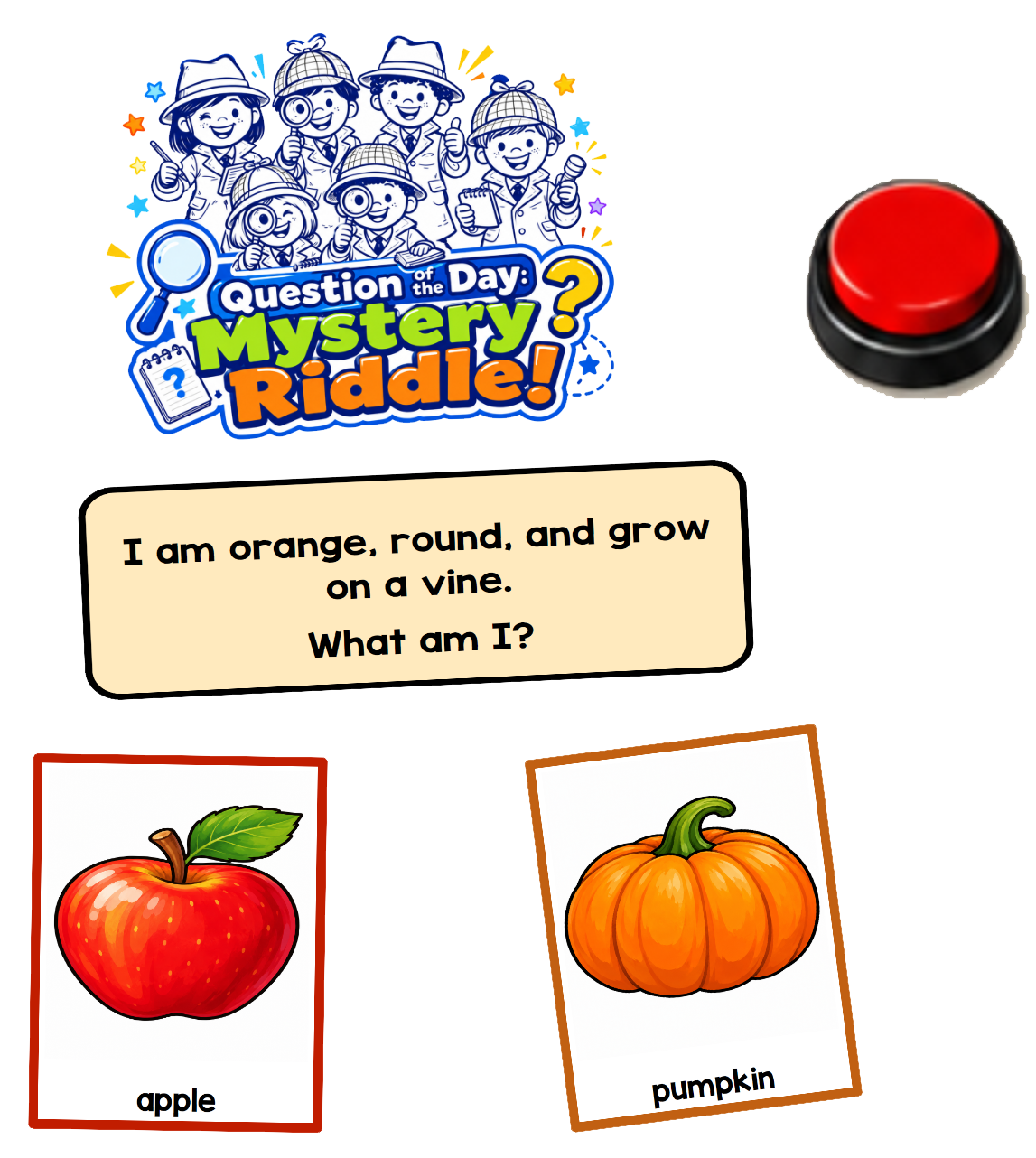
I am orange, round, and grow on a vine. What am I?
Riddles add one more ingredient: clues.
Instead of seeing the answer immediately, children listen for important information and use it to make a prediction.
You can reveal clues one at a time or read the complete riddle before showing answer choices.
Mystery riddles naturally encourage children to:
listen carefully,
remember information,
connect clues with what they already know,
and revise a guess when new information appears.
And because it feels like solving a tiny mystery, children rarely notice how much thinking they’re doing.
One Routine, Five Different Kinds of Thinking
The nice thing about these formats is that the classroom routine doesn’t have to change.
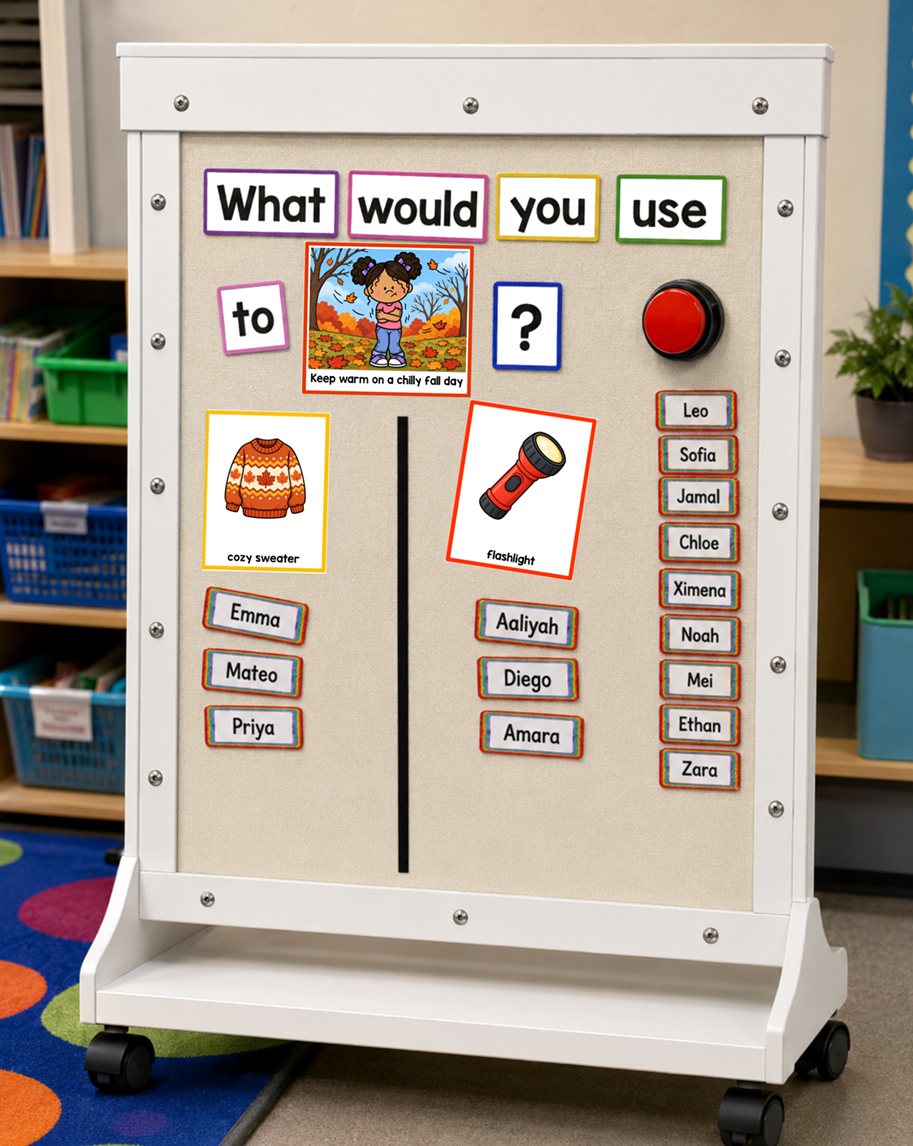
In our classroom, we display the Question of the Day along with the response choices. The full question is recorded on a talking button so children can independently listen to it when they arrive.
Each child moves a name card under the answer they choose.
Later, we come back to the board and talk about what happened.
Who chose each answer?
Why?
What did we notice?
Did anyone hear an idea that made them think differently?
The setup stays familiar while the kind of thinking changes.
That predictability is particularly useful in Preschool and Pre-K. Children don’t have to learn a new activity every morning. They already know what to do, which leaves more attention available for the actual question.
Try All Five Formats Without Creating Anything
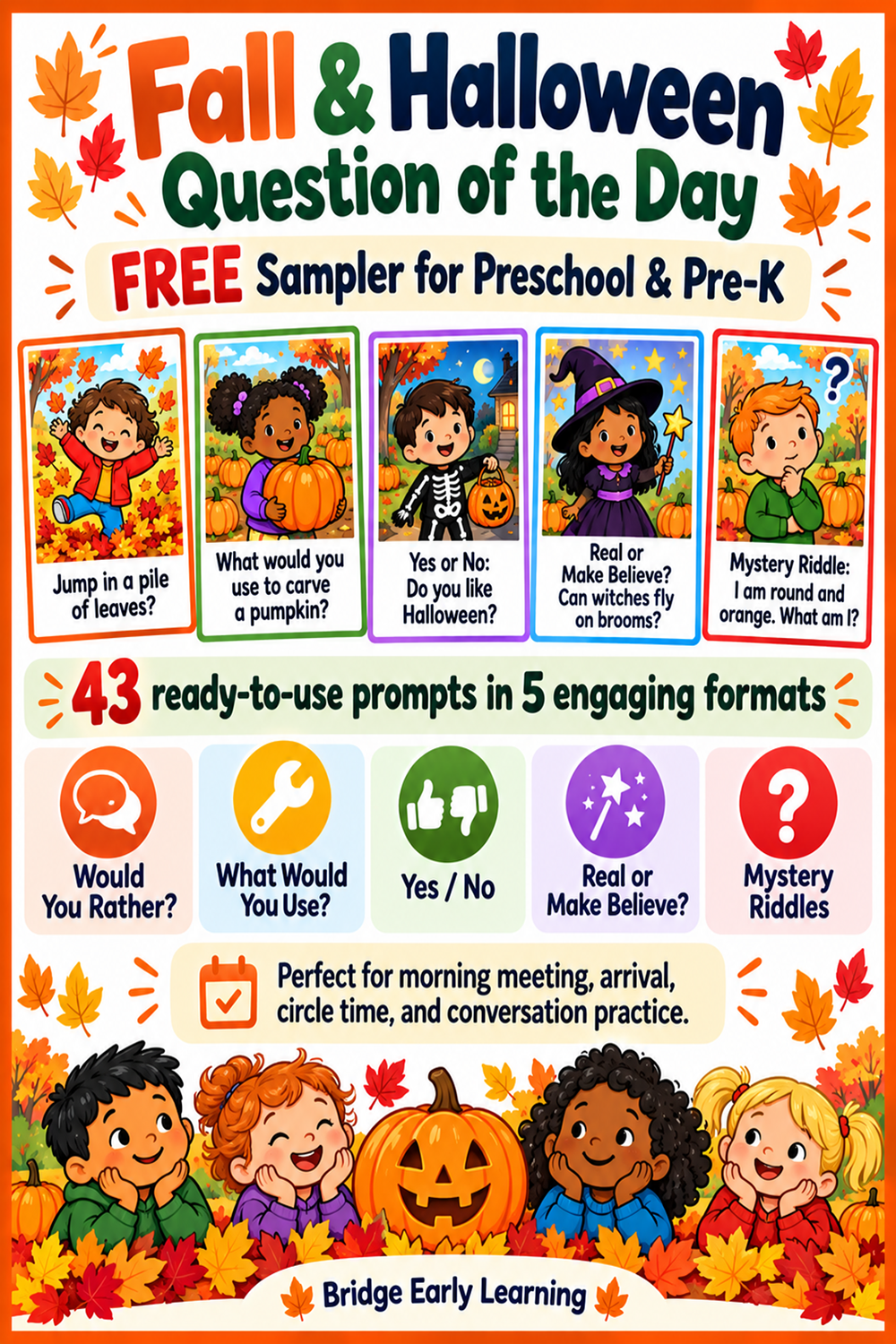
We put together a free Fall & Halloween Question of the Day Sampler specifically for that.
It includes 43 ready-to-use prompts across all five formats, so you can try Would You Rather, What Would You Use, Yes/No, Real or Make Believe, and Mystery Riddles with your class and see which ones generate the best conversations.
There’s no need to commit to a new program or spend an evening making cards.
Try a few questions. See how your children respond. Keep the formats that work for your group.
And if you use it, we’d genuinely like to hear what happens. Which format worked best? What would make it easier to use? What themes would you like to see next?
Because the best classroom resources usually don’t start with “What can we sell?”
They start with a much better question:
“What would actually be useful tomorrow morning?”
Rick
Free PDF • Print and use with your class

Have a Question or an Idea?
Looking for something you can’t find? Have a question about one of our activities? Or have an activity or classroom idea you’d like to share on the Bridge Early Learning website?
I’d love to hear from you.
Drop me a line: