When a child can’t read “map”
Finding Where the Breakdown Is
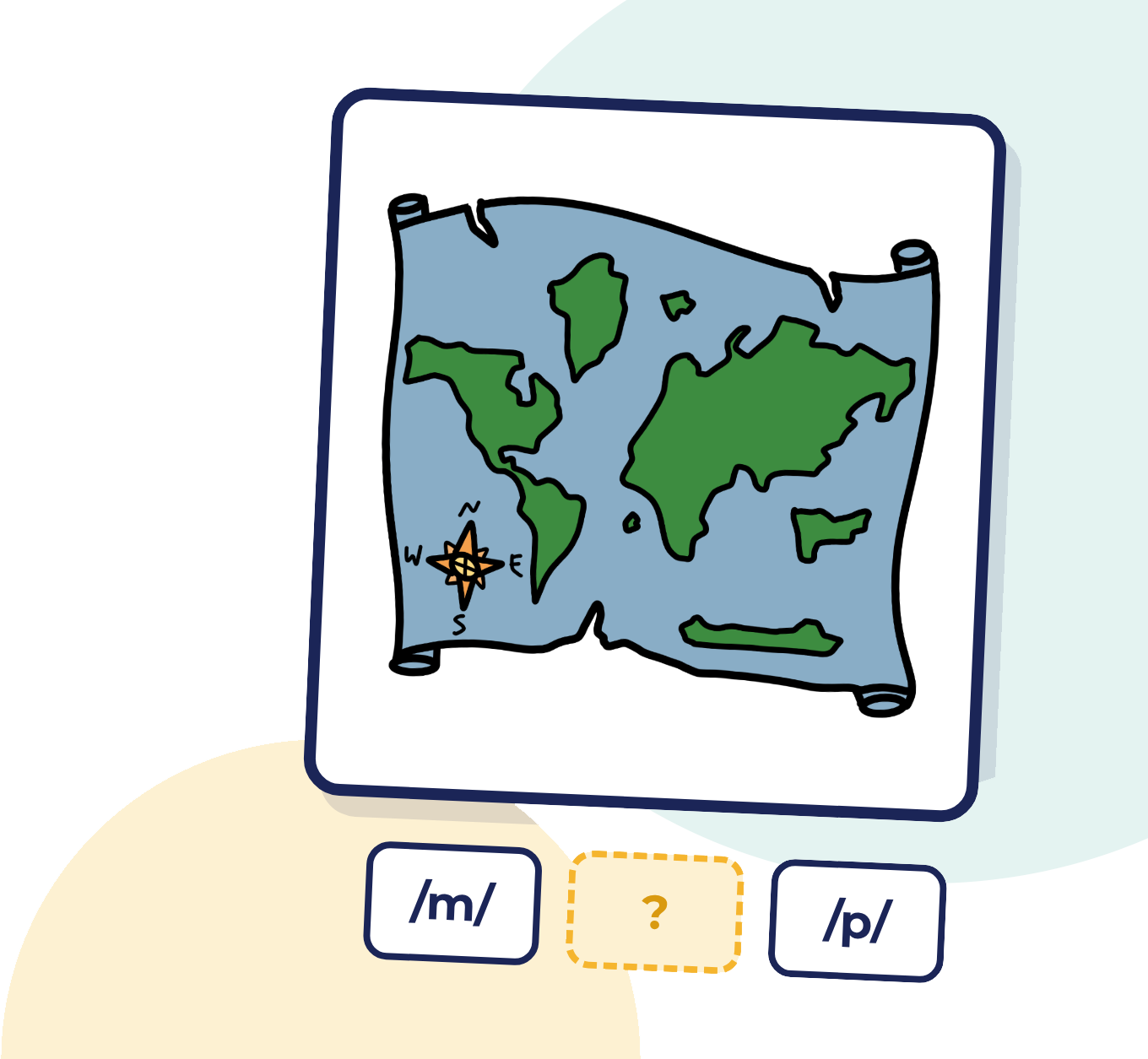
A girl in one of my small groups…Jamie, kept getting stuck on the word map.
She knew the sounds for m, a, and p. But when she looked at the word, she hesitated and guessed mat.
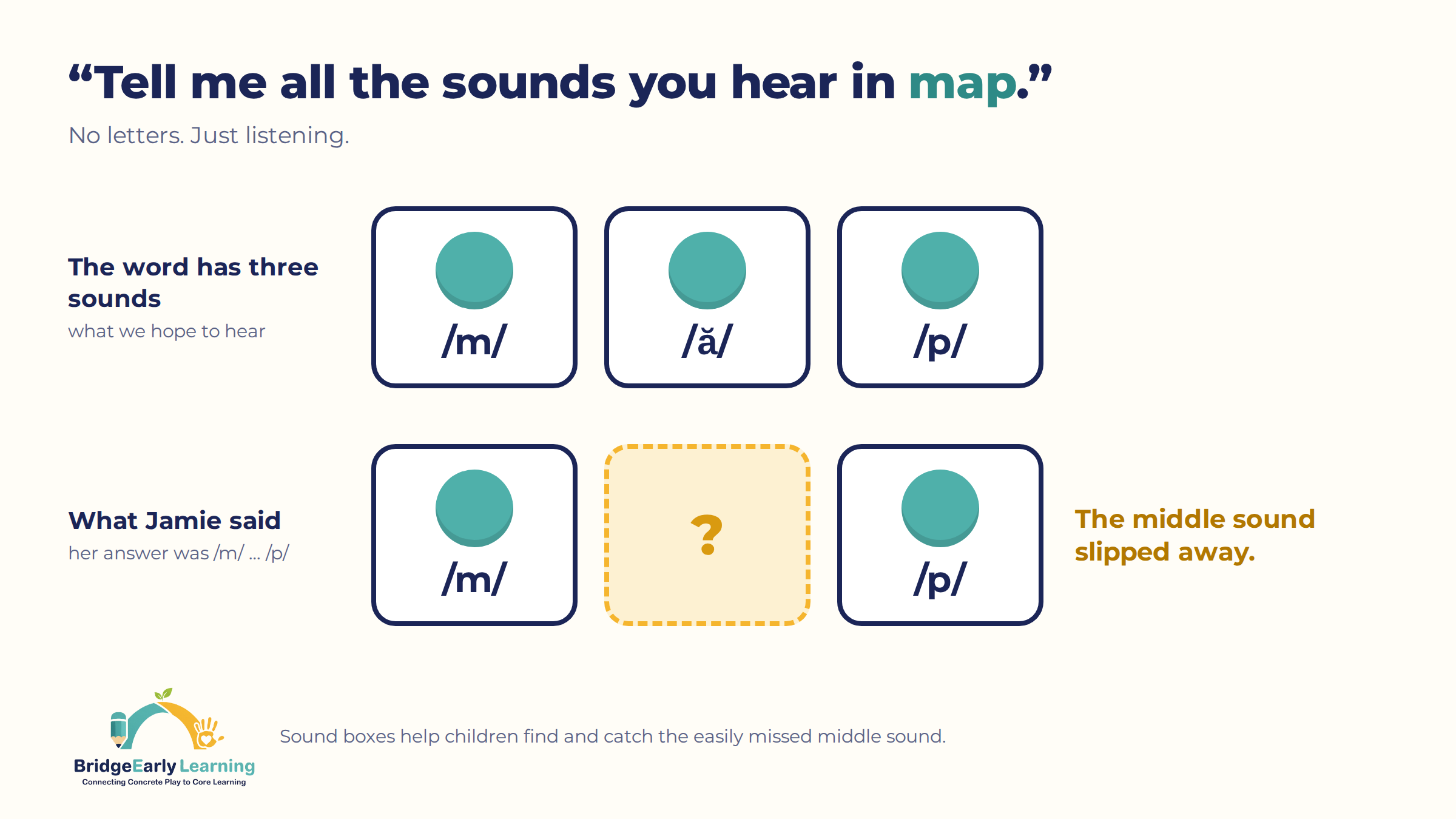
A few years earlier, I might have handed her another stack of CVC words and said, "Let's try again." Instead, I took the letters away and simply asked her to say the sounds she heard in map.
She gave me /m/ ... /p/.
The middle sound had disappeared.
The problem wasn't really reading map yet. Jamie wasn't consistently hearing all three sounds in the spoken word. Her guess of mat kept two of the three sounds, which on its own didn't tell me much. It took the second task to show me where the trouble began. So we went back to listening, stretching words apart, and making that easily missed middle sound a little easier to hear.
That little bit of information changed what came next
Hard, but why hard?
When a child can't read map, we know map was hard. What we don't know is why.
Can the child hear the three separate sounds? Can they connect those sounds to letters and blend them? Could they write the word if we said it out loud? Those are related skills, but they aren't the same skill. Looking at them one at a time is how we find where the trouble starts.
The research points the same way. The What Works Clearinghouse's K–3 foundational skills guide recommends teaching children to notice the sounds in speech and link them to letters. Separately, it recommends teaching decoding and the writing and recognizing of words, with strong evidence behind both. The National Reading Panel reached similar conclusions years earlier about phonemic awareness and systematic phonics.
So instead of asking only, "Can this child read CVC words?" I've found it more useful to ask three smaller questions.
Can they hear it?
Before map is three letters on a page, it's a spoken word with three sounds. In the AlphaCode segmentation probe, I show a picture, make sure we agree on the word, and ask, "Tell me all the sounds you hear in map." No letters, no sound boxes. That's what let me see Jamie's missing vowel, because I'd taken away everything she might have leaned on.
Can they read it?
Now the letters come back. Can the child connect each letter to its sound and blend them into a word? This is where watching how a child gets it wrong beats an X on the page. Did map become mop? Did the child say each sound correctly but couldn't push them together? Did it sound like a whole-word guess? Three wrong answers, three different conversations about what to teach next.
Can they write it?
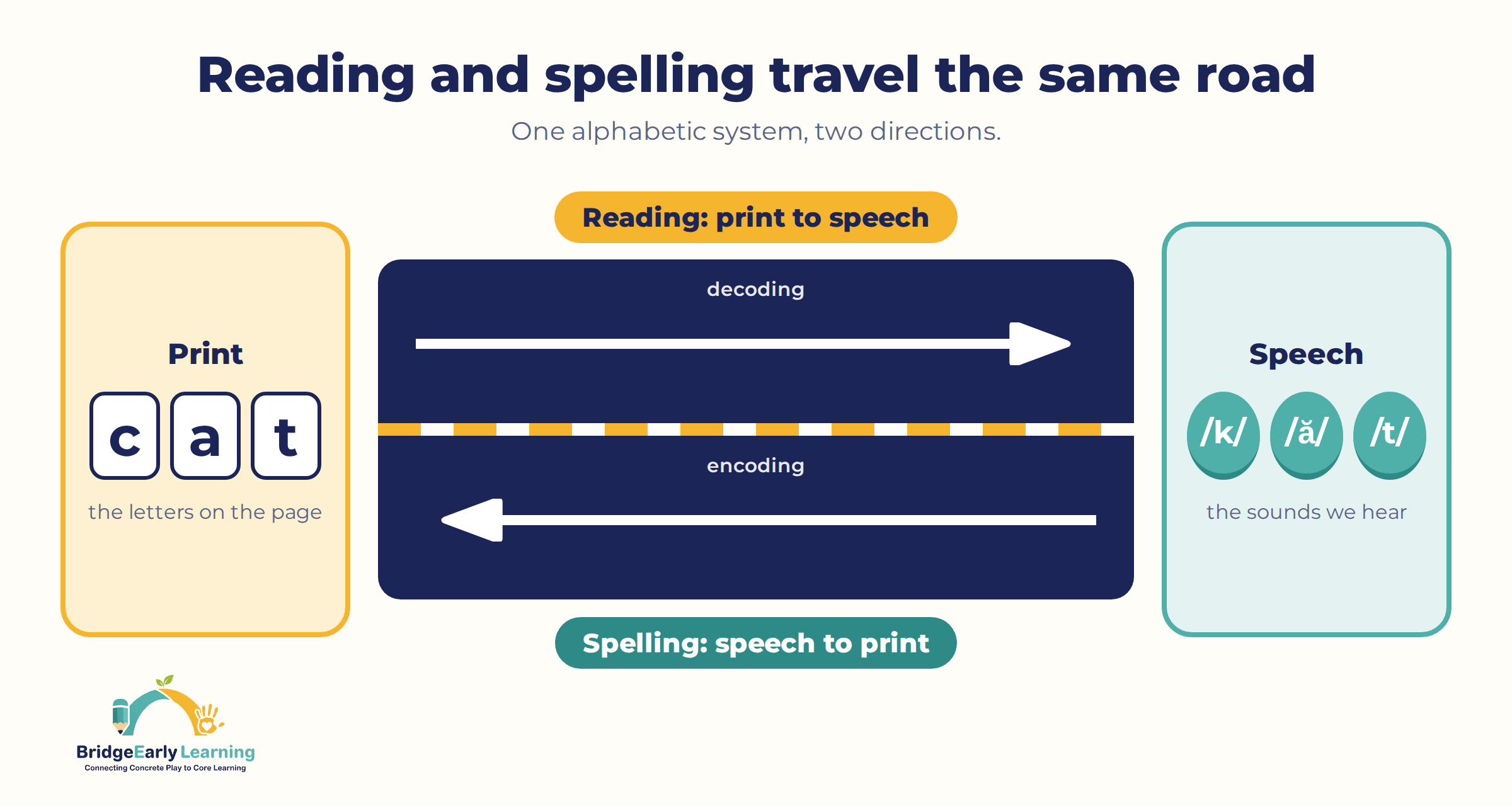
Reading goes from print to speech. Spelling travels the road in the other direction. I say, "Cat. The cat is sleeping. Cat," and the child writes it, holding the spoken word in mind, pulling its sounds apart, and choosing letters for each one.
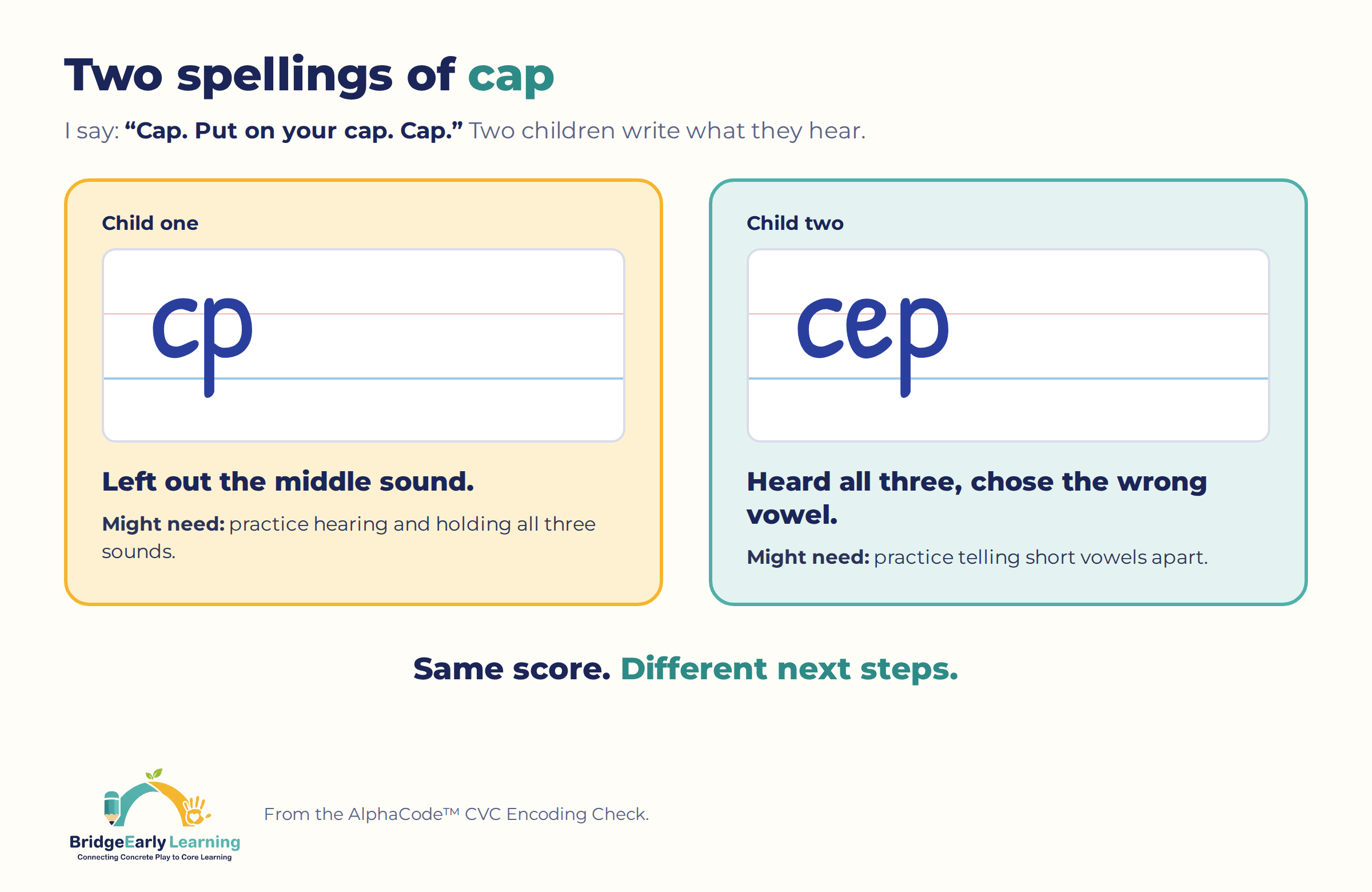
Suppose I say cap.
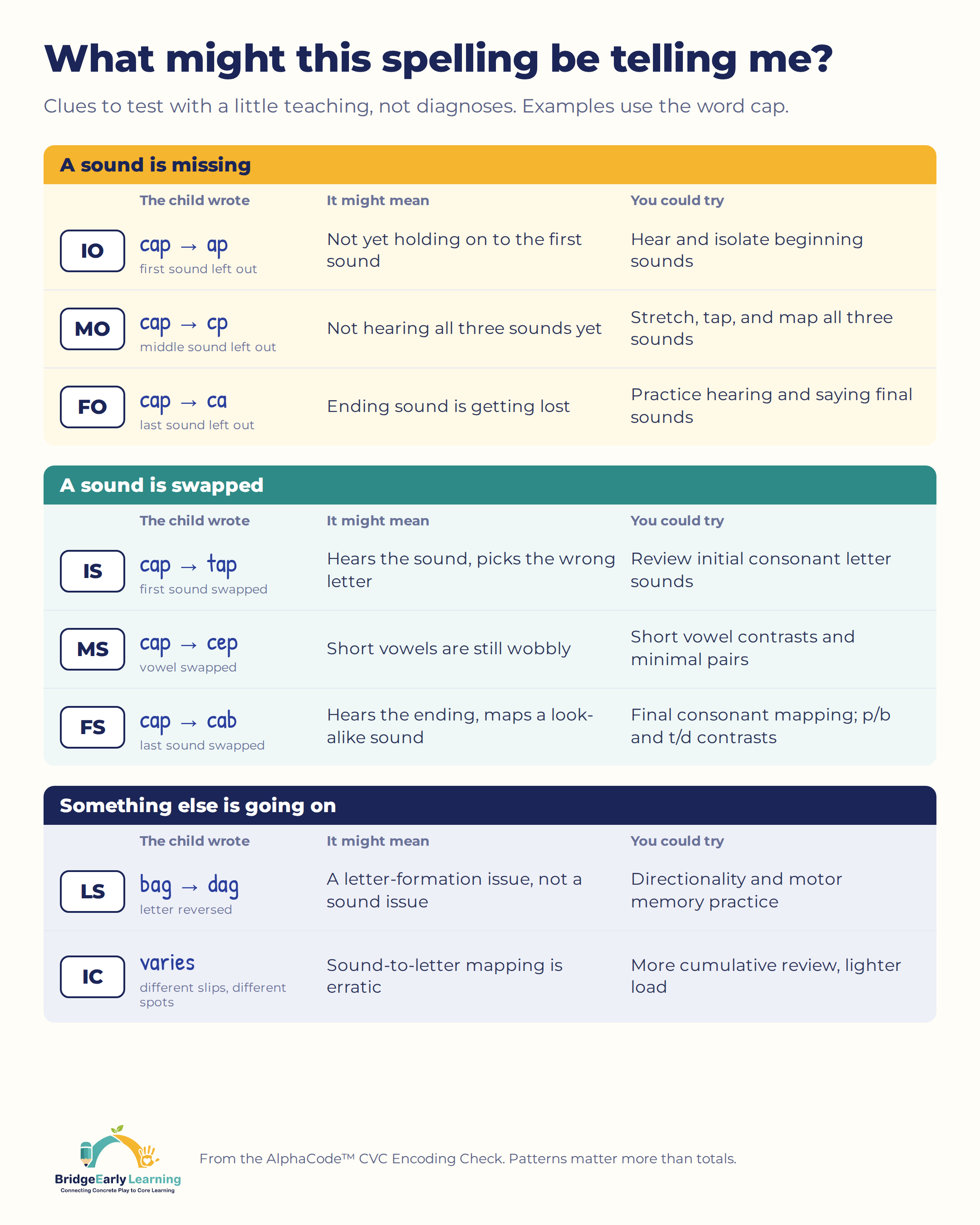
One child writes cp. Another writes cep. Neither is correct, but they're telling me different things. The first child left out the middle sound entirely. The second heard all three but chose the wrong vowel. One may need more work hearing and holding all the sounds. The other may need more work telling short vowels apart. Same score, different next steps.
A word about patterns
This is why the assessment records initial, medial, and final sounds separately, and why it has places to note things like vowel confusion, blending hesitation, guessing, and self-correction.
The idea behind the whole toolkit is simple: instructional decisions should be based on patterns, not just totals.
I'll be honest about one thing, though. The research supports looking at these skills separately. It doesn't prove that a particular error always means a particular thing. When I see a medial omission, I treat it as a hunch worth testing, not a diagnosis. Then I teach a little, watch what happens, and adjust. That's about all any of us can do, and I think it's enough.
The idea behind the whole toolkit is simple: instructional decisions should be based on patterns, not just totals.
I'll be honest about one thing, though. The research supports looking at these skills separately. It doesn't prove that a particular error always means a particular thing. When I see a medial omission, I treat it as a hunch worth testing, not a diagnosis. Then I teach a little, watch what happens, and adjust. That's about all any of us can do, and I think it's enough.
You don't have to assess everything
Nobody wants to turn a five-year-old into the subject of a 45-minute literacy examination. I certainly don't.
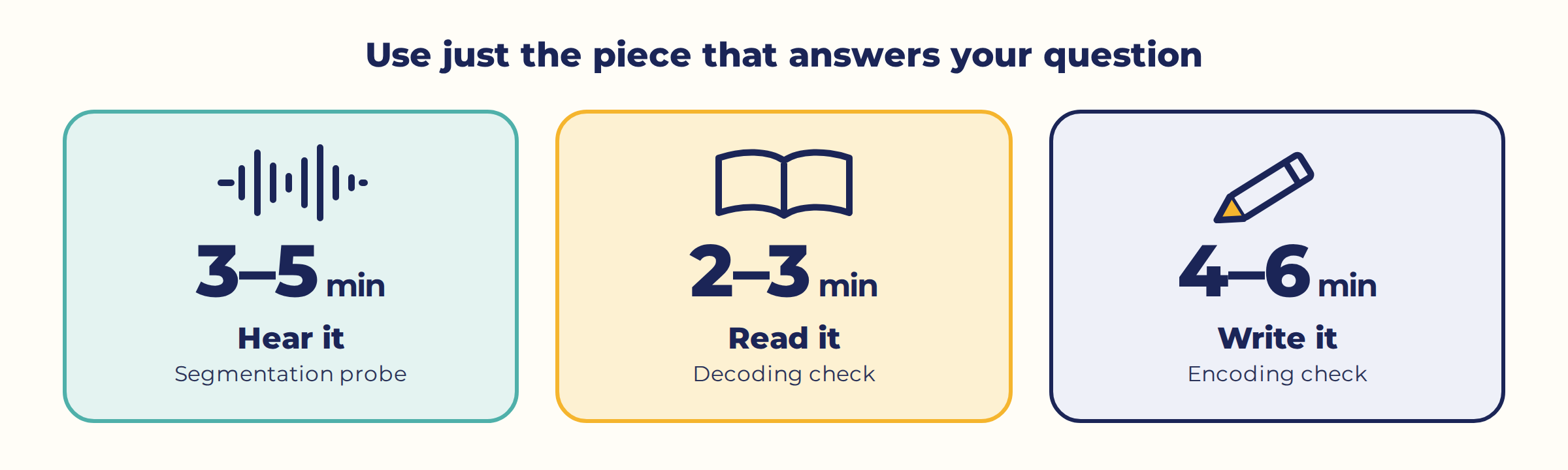
The three pieces stand on their own. The segmentation probe takes about 3 to 5 minutes. The decoding check takes 2 to 3. The encoding check takes 4 to 6. You can use just the one that answers the question you're asking.
For some children, you'll already know enough to start teaching. For others, a few extra minutes can save weeks of practicing the wrong thing.
Back to Jamie
That's the shift I'm hoping for. Not "Jamie got six words right," but something more like this:
Jamie knows her letter sounds, but she isn't yet hearing the middle sound in spoken words. That's where we'll start.
It's a small change in how we talk about assessment, and I think a meaningful one in how we teach.
Within a few weeks of listening and stretching, Jamie could find that vowel. And when the letters came back, map stopped being a mystery.
If you'd like to try this with your own students, the AlphaCode™ CVC Foundational Skills Assessment is free below. It includes the segmentation probe, decoding checks for each short vowel, an encoding check, and a "Now What?" page that connects what you see to what you might try next. I'd love to hear what you notice.
Rick